
18 November 2026
Porcelain Veneers vs. Composite Bonding: A Comparison
Learn about front tooth aesthetics by comparing porcelain veneers and composite bonding. Discover which method might be right for you.
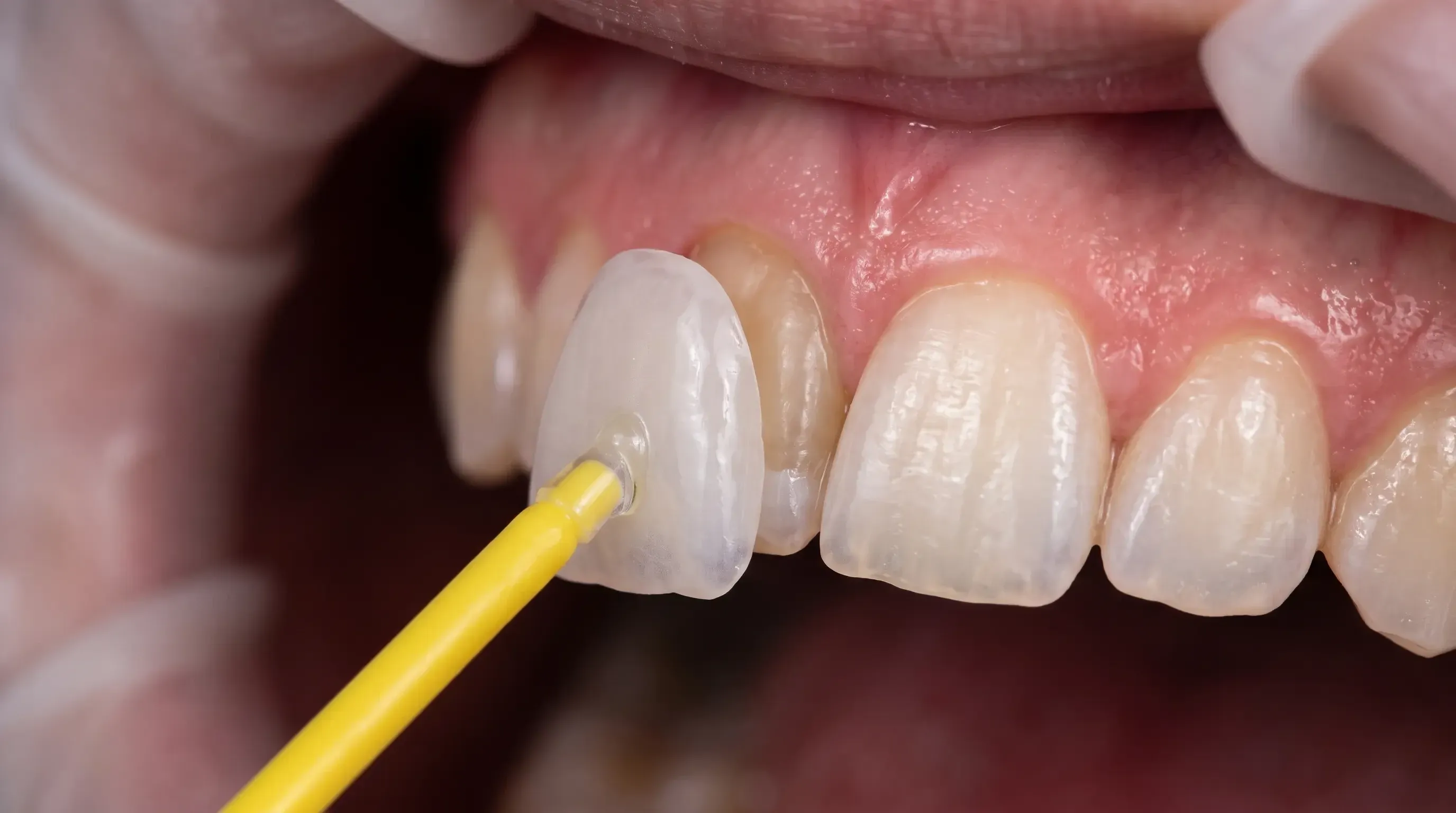
Porcelain veneer is a thin porcelain restoration option that can be chosen for front tooth aesthetics. Composite bonding, on the other hand, is a method among aesthetic filling types that is applied directly to the tooth surface. In this article, a comparison of porcelain veneers and composite bonding will be made, and the general characteristics of both approaches will be discussed.
What Is a Porcelain Veneer?
Porcelain veneers are thin porcelain leaves produced in a laboratory environment, prepared by removing a very small amount of tissue from the front surface of the tooth. They can be considered for correcting color, shape, and minor misalignments. The procedure is usually completed in a few appointments and creates a permanent change.
What Is Composite Bonding?
Composite bonding is a procedure where the dentist directly shapes a special composite material onto the tooth at the clinic. It is among the types of aesthetic fillings and can be finished in a single appointment. It is frequently considered for minor corrections and color changes.
Porcelain Veneer vs. Composite Bonding Comparison
- Durability: Porcelain veneers can generally last longer; composite bonding may be more susceptible to wear over time.
- Application Process: Porcelain veneers require a laboratory phase; composite bonding is shaped directly in the clinic.
- Cost and Maintenance: Composite bonding may be more cost-effective initially, while porcelain veneers may require less maintenance.
- Aesthetic Result: Both methods can provide a natural appearance in terms of front tooth aesthetics; the choice varies according to tooth structure.
When Can They Be Considered?
Porcelain veneers can come to the agenda for those looking for a more permanent solution or for prominent color and form changes. Composite bonding, as a less invasive option, can be preferred for minor corrections. The suitability of both methods is clarified with examination and imaging.
What Should Be Considered After the Procedure?
- Avoiding hard foods is recommended.
- Regular oral care and the use of dental floss can be beneficial.
- Changes can be monitored with periodic check-ups.
Frequently Asked Questions
Are porcelain veneers or composite bonding longer-lasting?
Porcelain veneers are generally considered more durable. However, every patient's oral structure is different, and the duration may vary depending on the patient.
Is composite bonding completed in a single appointment?
Yes, composite bonding can be applied in a single appointment in most cases. Porcelain veneers, however, may require multiple appointments due to the laboratory process.
Which looks more natural for front tooth aesthetics?
Both methods can yield natural results. The dentist can evaluate the most suitable option according to the tooth structure and expectations.
Is special care required after porcelain veneers?
Continuing regular brushing and check-ups is sufficient. Similar care is recommended for composite bonding.
How is the choice made among aesthetic filling types?
The choice is determined during the examination based on the current condition of the tooth, bite relationship, and the patient's requests. A personal evaluation is essential.
Conclusion
Porcelain veneers and composite bonding are two approaches offering different features for front tooth aesthetics. Which one might be suitable is only understood as a result of an examination. Every patient's need is different, and the decision must be made individually.
Expert Information
This content has been prepared for informational purposes in the field of oral and dental health. Dt. Salman Taştan graduated from Marmara University Faculty of Dentistry in 2020 and works in the fields of implants and implant-supported prostheses, smile design, laminate and zirconium crowns, root canal treatment, and aesthetic restorations.
This content has been prepared solely for general informational purposes; it does not replace diagnosis or treatment. You should consult your dentist for your oral and dental health complaints.