
15 January 2026
What You Need to Know Before Implant Treatment
Discover the key points you need to know about the process, planning, and healing before starting dental implant treatment.
Missing teeth can affect not only your appearance but also your chewing comfort and the balance of adjacent teeth. Implant treatment is one of the commonly preferred options to fill these gaps. Knowing how the process works before deciding on treatment helps clarify your expectations and allows you to make a more confident decision.
What is an implant?
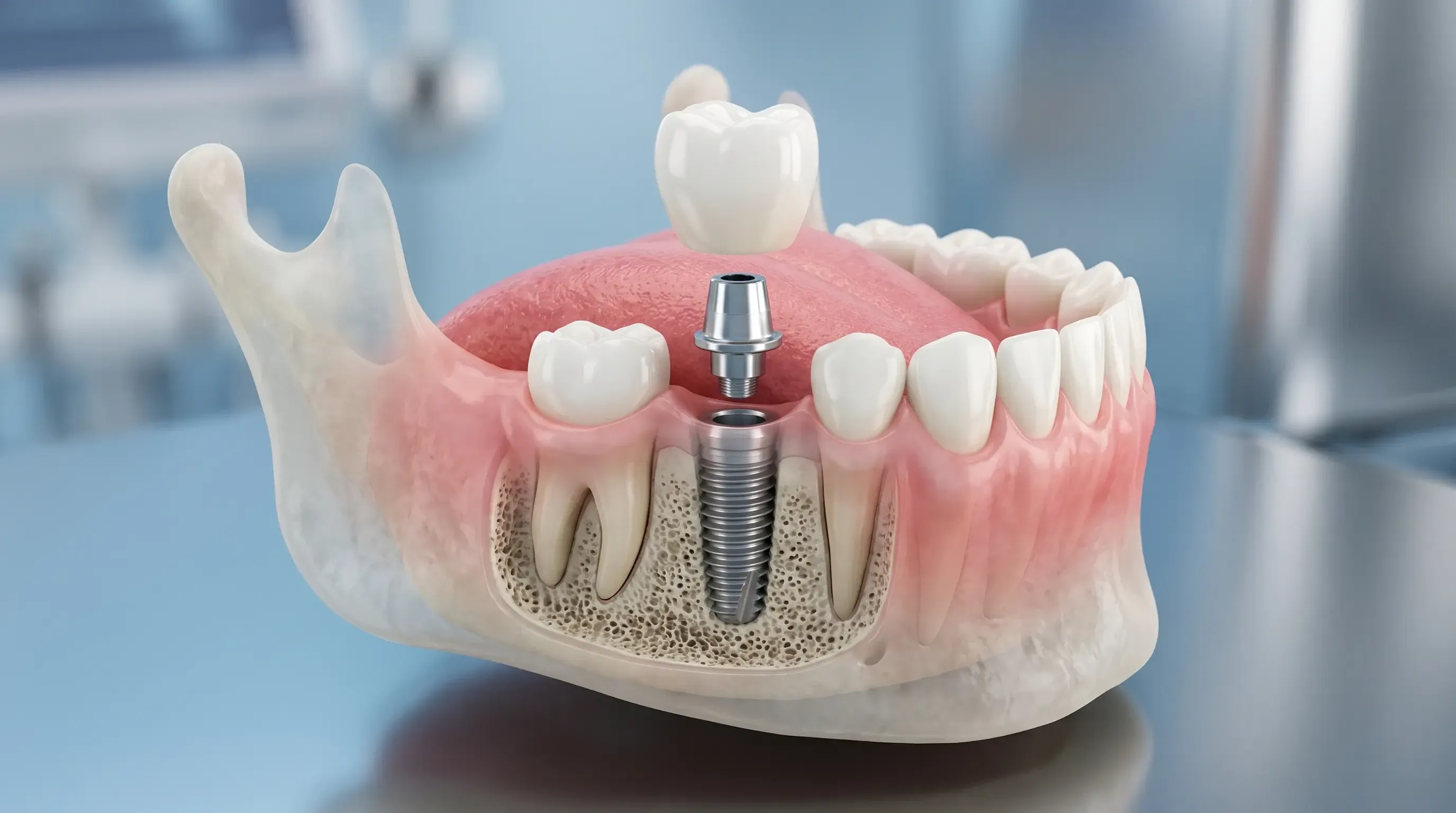
A dental implant is a screw, usually made of titanium, placed into the jawbone to replace the root of a missing tooth. Once it integrates with the bone, a superstructure (crown or bridge) that looks like a tooth is placed on top.
Is everyone suitable for an implant?
Suitability is determined by evaluating the amount and density of the jawbone, gum health, and overall health condition together. Certain systemic diseases, medications used, or smoking can affect planning. Therefore, it is important to share your complete medical history during your initial examination.
What is done during the planning phase?
- Examination and consultation: Your complaints, expectations, and oral structure are evaluated.
- Imaging: Bone structure and anatomical details are examined in detail with 3D dental tomography. This helps plan the position and size of the implant more predictably.
- Treatment plan: You will be explained how many implants are needed, whether additional procedures are required, and the estimated stages of the process.
How does the treatment process proceed?
The implant placement procedure is performed under local anesthesia. Afterward, a healing period is expected for the implant to integrate with the bone; this duration varies from person to person. Once healing is complete, impressions are taken, and the permanent superstructure is prepared and placed.
What should be considered during the healing period?
- Regularly follow the medications and care instructions recommended by your physician.
- Avoid hard and very hot foods in the first few days.
- Pay attention to oral hygiene; clean the treatment area as recommended.
- Smoking can negatively affect healing; take a break if possible.
- Do not skip your control appointments.
Long-term implant care
Implants do not decay, but the gum and bone tissue around them require care. Regular brushing, using dental floss or interdental brushes, and periodic check-ups contribute to the implant remaining healthy for a long time.
The most accurate way to find out if implant treatment is suitable for you is through a personal evaluation with examination and imaging.
This article is for general informational purposes; consult your physician for diagnosis and treatment.